For the past decade, the narrative surrounding artificial intelligence infrastructure has been singular: the Graphical Processing Unit (GPU) is king. However, a significant structural shift is currently underway in the data center, one that is fundamentally altering the economics of AI. According to recent industry analysis, the primary cost driver for AI accelerators is migrating from the compute die to the memory that feeds it. As Large Language Models (LLMs) continue to balloon in size, the industry is colliding with the "Memory Wall," a bottleneck where system performance is dictated not by how fast a processor can calculate, but by how quickly it can access data.
The implications of this shift are profound. While Nvidia remains the dominant architect of AI systems, the critical component limiting performance—and driving up prices—is no longer the logic chip itself, but the High-Bandwidth Memory (HBM) surrounding it. Recent data indicates that memory shortages and price surges are projected to account for nearly 45% of the growth in cloud capital expenditures by 2026.
Why is AI infrastructure shifting away from GPU dominance?
Historically, the GPU die was the most expensive component of an AI accelerator. This cost structure is currently inverting. The explosion of generative AI has necessitated massive bandwidth to keep compute cores active; without sufficient memory throughput, powerful GPUs remain idle, waiting for data to arrive. To combat this, manufacturers are turning to increasingly complex memory solutions.
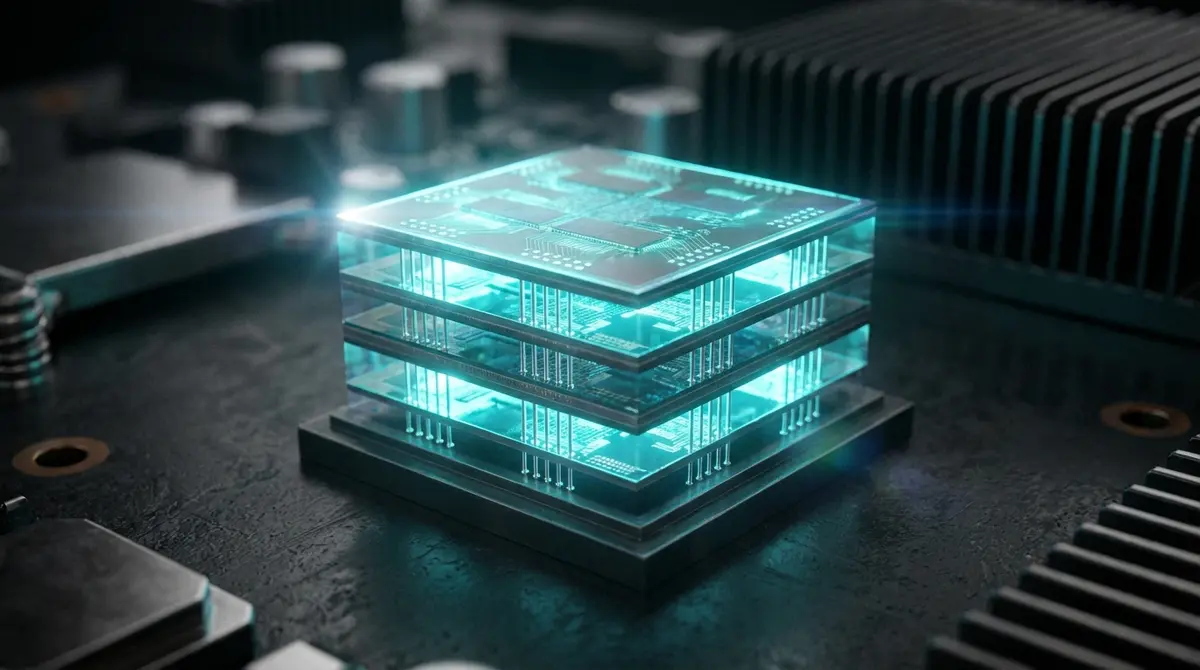
The industry is rapidly adopting vertically stacked HBM modules, specifically 12-hi and 16-hi stacks, to increase density and speed. However, these modules are significantly harder and more expensive to manufacture than the processors they support. As noted by TrendForce and the Astute Group, rising memory prices are no longer a marginal cost issue but are becoming the dominant factor in GPU pricing. Consequently, the manufacturing complexity has shifted from the horizontal scaling of logic gates to the vertical integration of memory dies.
Who are the key players driving the HBM market?
As the market pivots toward memory-centric architecture, a distinct hierarchy has emerged among manufacturers. Unlike the contract chip foundry market, which is dominated by a single player, the HBM landscape is contested by three major entities, though one holds a commanding lead.
Current Market Share Breakdown (2025/2026):
SK Hynix: Approximately 62% market share. They are currently the clear leader in the HBM space.
Micron Technology: Approximately 21% market share. Micron reported record revenue growth in fiscal 2025, driven largely by this surge in HBM demand.
Samsung Electronics: Approximately 17% market share. While currently trailing, Samsung is aggressively pushing its roadmap to regain lost ground.
This dynamic has created a "supercycle" for these memory manufacturers. The demand is so intense that it threatens to allow memory makers to out-earn the contract chip foundries that have historically held the balance of power in the semiconductor supply chain.
How does the ‘Memory Wall’ impact future AI development?
The "Memory Wall" was once a theoretical concern for computer architects; today, it is an operational reality. The bottleneck limits AI model inference speed more severely than raw processing power. To address this, the industry is transitioning to HBM4 technology in 2026. This next-generation memory is essential for mitigating bandwidth limitations.
Major hardware architects are aligning their roadmaps accordingly. Nvidia’s next-generation "Rubin" platform is being designed specifically to leverage HBM4. This indicates that hardware scaling is no longer just about adding more CUDA cores; it is about widening the highway between memory and logic. Concurrently, Samsung is accelerating its HBM4 development to capture the next wave of infrastructure upgrades.
What are the financial implications for cloud providers?
The financial impact of this transition is staggering. RBC Capital Markets projects that memory price hikes could account for almost half of the growth in cloud capital expenditure by 2026. This creates a precarious situation for cloud providers and enterprises deploying AI models. The cost of inference—running the models once they are trained—is at risk of spiraling upward due to persistent HBM supply shortages.
Furthermore, this scarcity forces a change in strategy. Companies can no longer rely solely on hardware scaling to improve performance. The high cost and limited availability of HBM are forcing engineers to focus on optimizing model efficiency rather than simply throwing more hardware at the problem.
The Bigger Picture
The transition to a memory-centric AI economy represents a fundamental transfer of power within the semiconductor ecosystem. While Nvidia retains the platform advantage, the economic value is bleeding upstream to SK Hynix, Micron, and Samsung, who now control the scarcest resource in the stack. This bottleneck suggests that the era of brute-force AI scaling is hitting a financial ceiling; the winners of the next cycle won’t just be those with the fastest chips, but those who can secure the supply chain for the memory required to run them. For the end-user, this inevitably means that the plummeting costs of AI intelligence we have grown accustomed to may soon level off, or even reverse, until HBM manufacturing yields stabilize.
![Illustration related to AI Memory vs Compute: The Cost Inversion [Analysis]](https://today.bytewire.press/wp-content/uploads/bytewire-images/2026/02/ai-cost-inversion-memory-eclipsing-compute-67dbbb7db9.webp)
![Diagram related to AI Memory vs Compute: The Cost Inversion [Analysis]](https://today.bytewire.press/wp-content/uploads/bytewire-images/2026/02/ai-cost-inversion-memory-eclipsing-compute-17cfb7c225.webp)